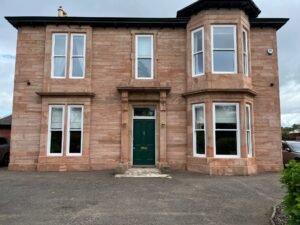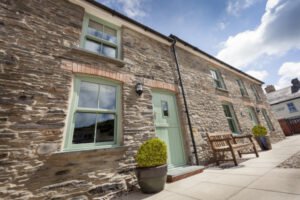
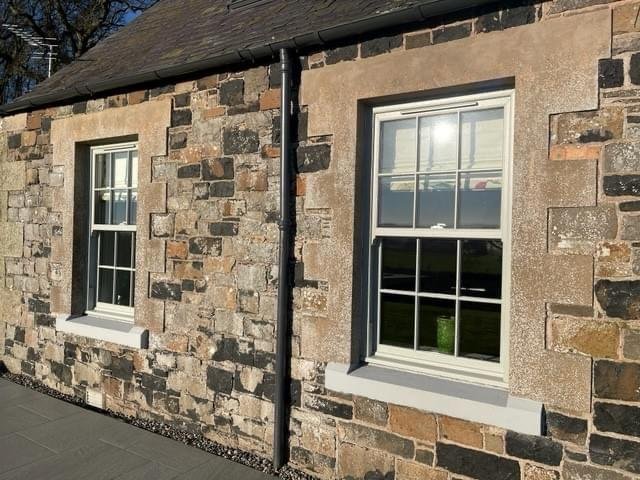
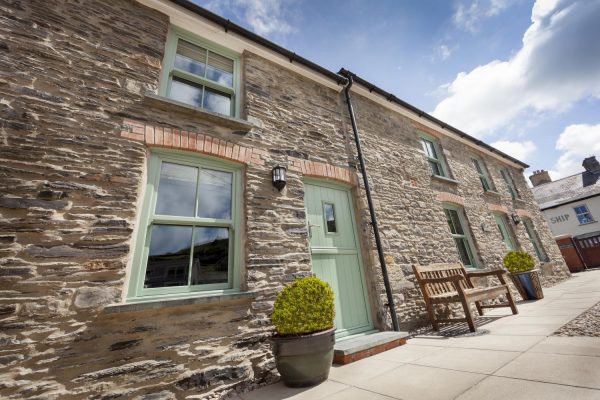
Victorian sash windows are traditional vertically sliding windows commonly found in British homes built during the Victorian era (1837–1901). They are recognised for their elegant proportions, larger glass panes and, in many later designs, decorative sash horns. Common glazing arrangements include two-over-two and one-over-one, although styles varied throughout the period.
Originally made from timber, Victorian sash windows can now be recreated using modern uPVC frames that preserve much of their traditional appearance while offering contemporary glazing and operating features.
What Do Victorian Sash Windows Look Like?
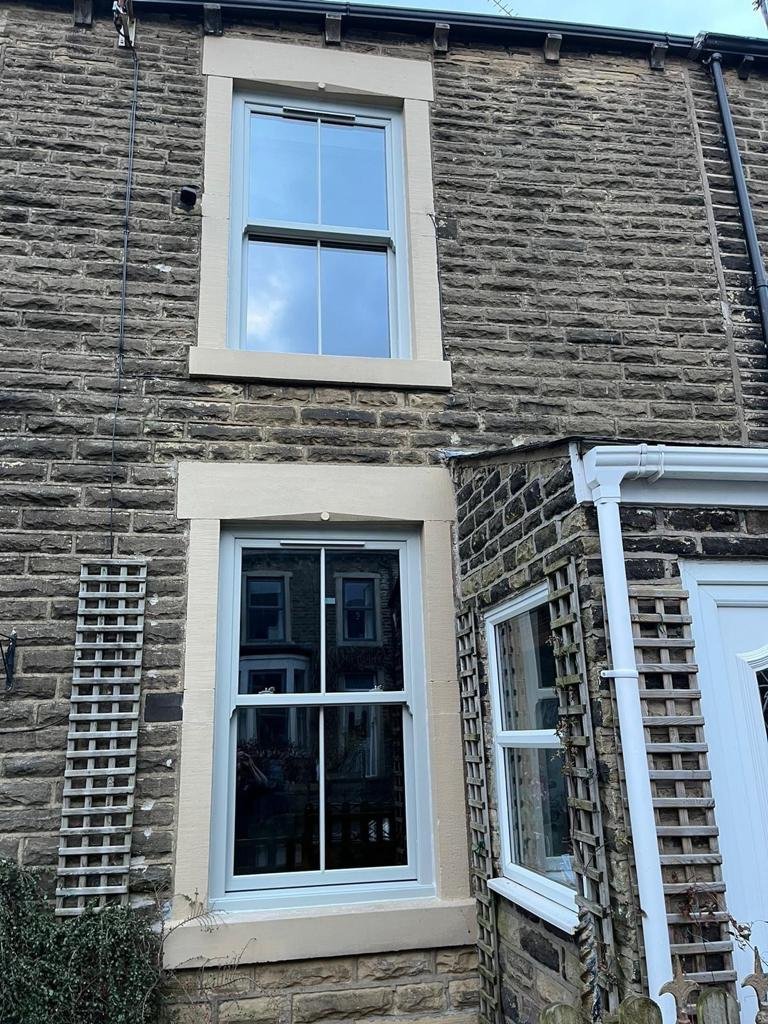
Victorian sash windows developed from earlier Georgian designs as glass manufacturing improved, making larger panes more accessible.
Instead of dividing each sash into numerous small panes, many Victorian windows used fewer, larger sections of glass. This created a clearer view outside and allowed more daylight into rooms.
The main features include:
- Larger glazing panes: Commonly one or two panes in each sash, although multi-pane designs also existed.
- Sash horns: Shaped projections beneath the upper sash, particularly associated with later Victorian windows.
- Vertical sliding operation: Upper and lower sashes that move within the frame.
- Traditional meeting rails: Horizontal sections where the two sashes meet.
- Timber construction: Original windows commonly featured painted timber frames, sometimes with decorative mouldings.
Not every Victorian property has identical windows. The original design often depended on when the building was constructed, its location and architectural character.
Victorian Sash Window Glazing Patterns
The glazing arrangement is one of the easiest ways to identify different Victorian sash-window styles.
| Glazing style | Appearance |
| One-over-one | One large pane in the upper sash and one in the lower sash |
| Two-over-two | Two panes in each sash, commonly divided by a central vertical glazing bar |
| Multi-pane | Several smaller panes, often reflecting earlier Georgian influences |
One-over-one and two-over-two arrangements became particularly recognisable Victorian designs.
When replacing existing windows, matching the original glazing pattern can make a significant difference to the property’s appearance.
Victorian vs Georgian Sash Windows: What’s the Difference?
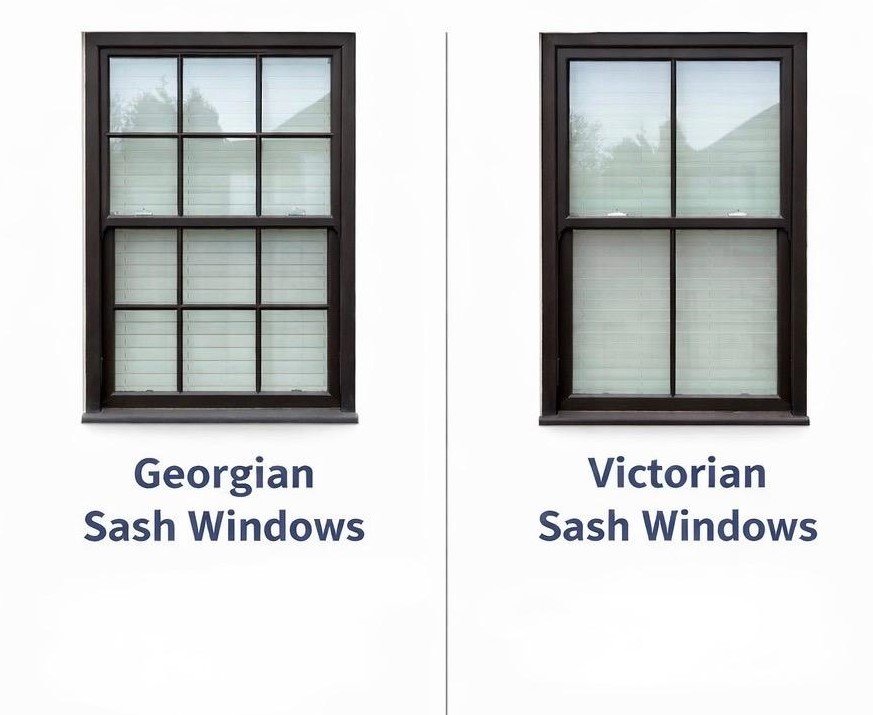
The most noticeable difference is often the size and arrangement of the glass panes.
Georgian sash windows commonly featured multiple small panes, such as six-over-six, because larger sheets of glass were more difficult and expensive to produce.
During the Victorian period, improvements in glass manufacturing encouraged the use of larger panes with fewer glazing bars.
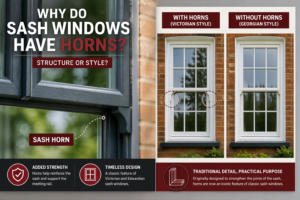
Sash horns also became more prominent in Victorian designs. In traditional timber windows, they helped strengthen sash joints as larger and heavier panes became common.
However, the distinction is not absolute. Some early Victorian homes retained Georgian-style glazing, while different patterns remained popular throughout the nineteenth century.
For an older property, the existing window proportions and original architectural details are usually more useful than choosing a design based solely on its period name.
Can uPVC Sash Windows Match Victorian Designs?
Yes. Modern uPVC sliding sash windows can recreate many of the characteristic features of Victorian timber windows, including sash horns, traditional glazing arrangements, shaped profiles and deeper bottom rails.
The quality of the visual match depends on the system, proportions and selected options.
Some of the most useful features to consider are explained below.
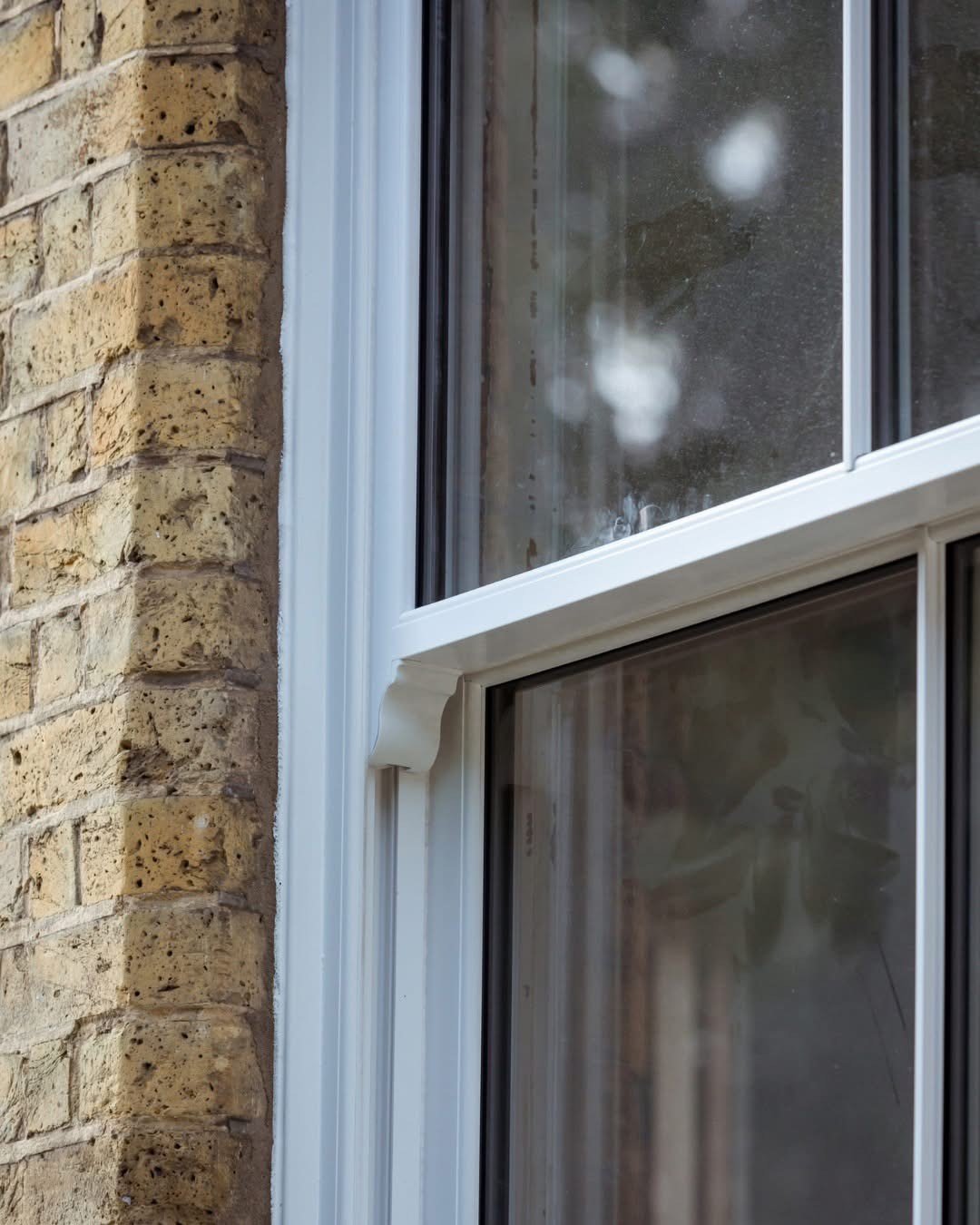
Run-Through Sash Horns
Traditional sash horns are a distinctive feature of many Victorian windows.
Modern uPVC systems can reproduce their appearance using decorative or run-through horn designs.
For example, the Spectus sliding sash system offers run-through sash horns with mechanical joints designed to resemble traditional timber construction.
The horn shape and its connection to the sash can influence how authentic the finished window looks, especially when viewed close up.
Deep Bottom Rails and Slim Meeting Rails
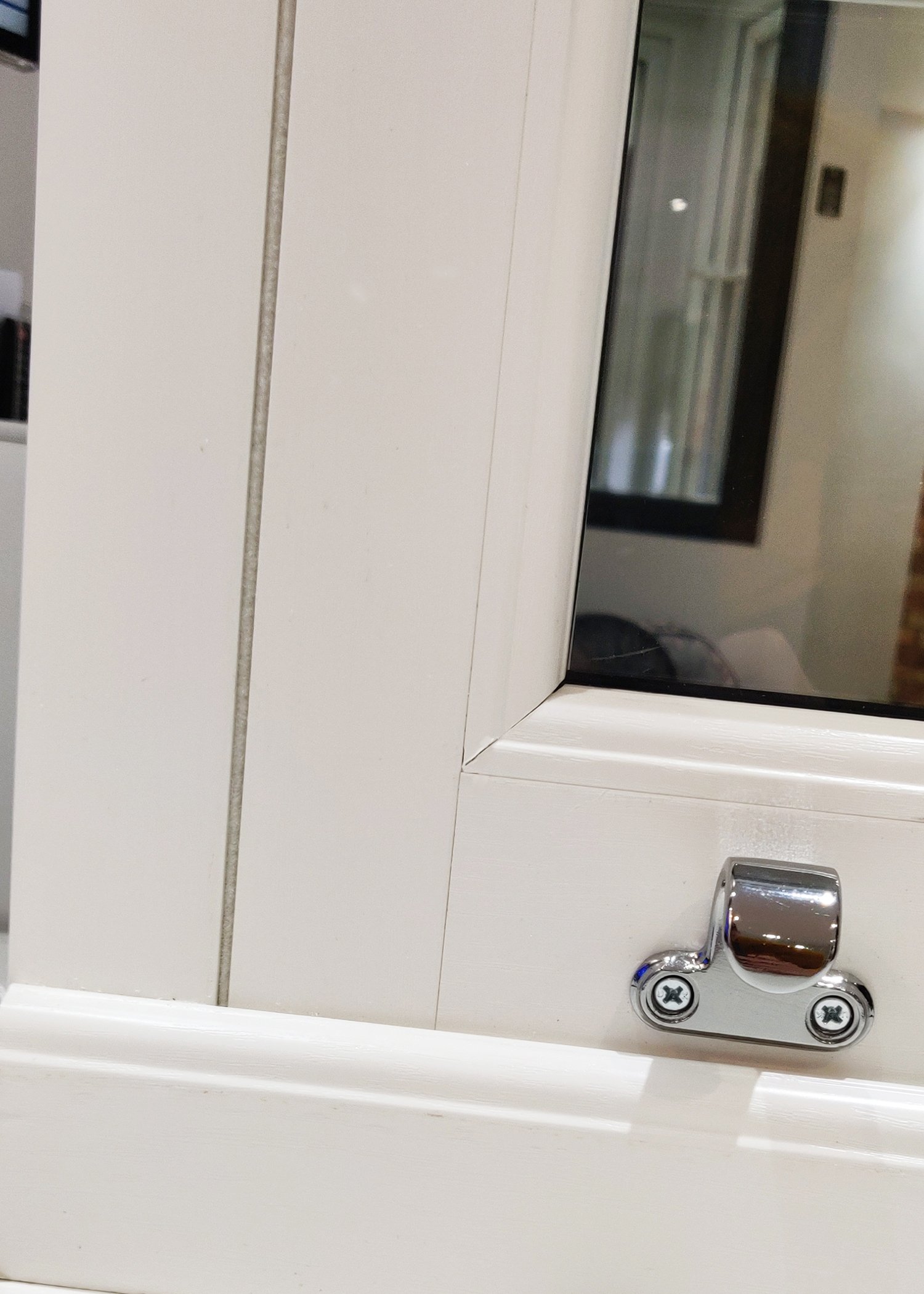
A deep bottom rail creates a more substantial lower section, similar to that found on many traditional timber sash windows.
A slim meeting rail can also help reproduce historical proportions by reducing the visual width of the horizontal division between the two sashes.
The Spectus system includes a 37 mm slim meeting rail option for suitable configurations.
These details may appear relatively small individually, but together they can noticeably change the proportions and character of the window.
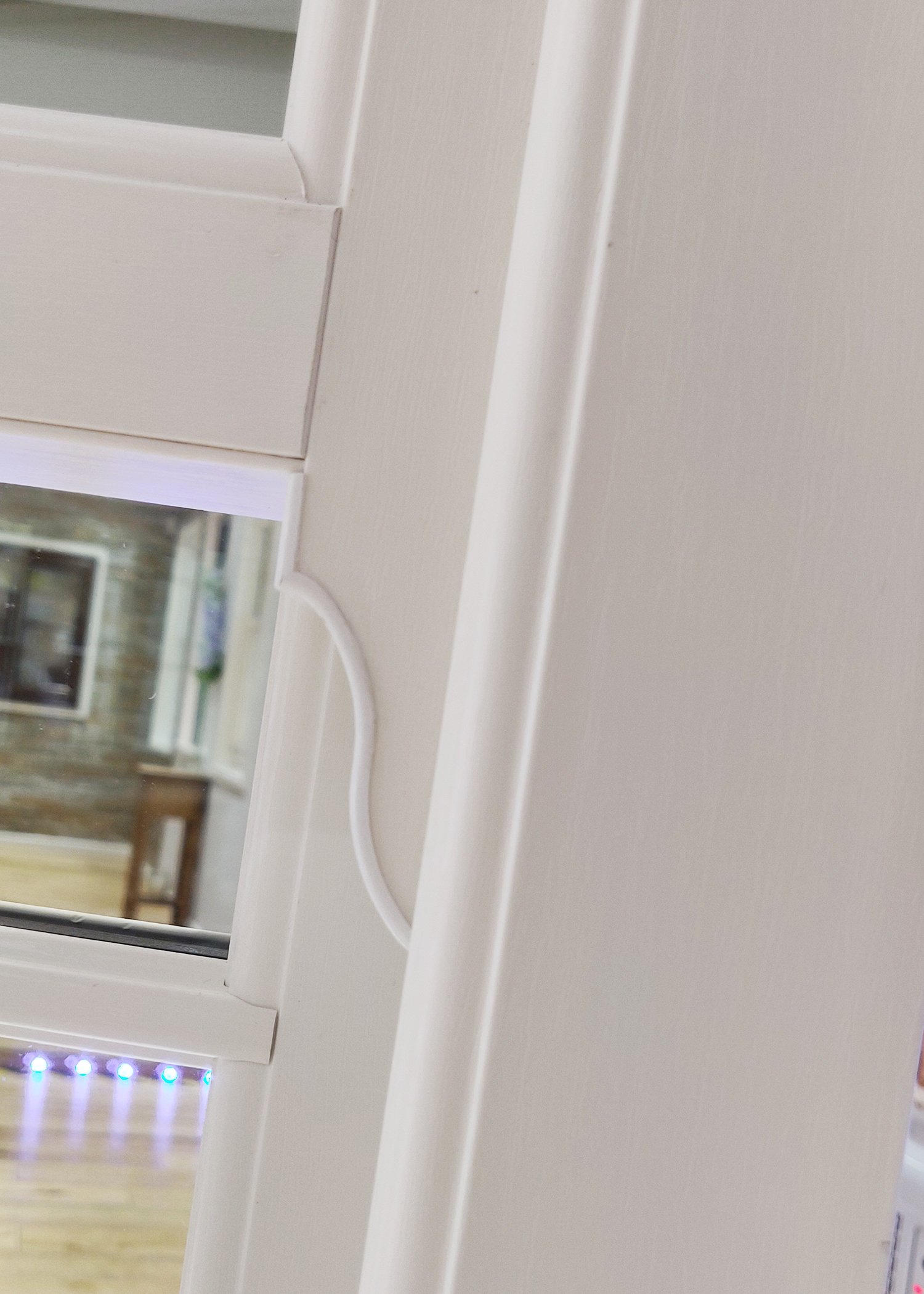
Mechanical Joints and Glazing Bars
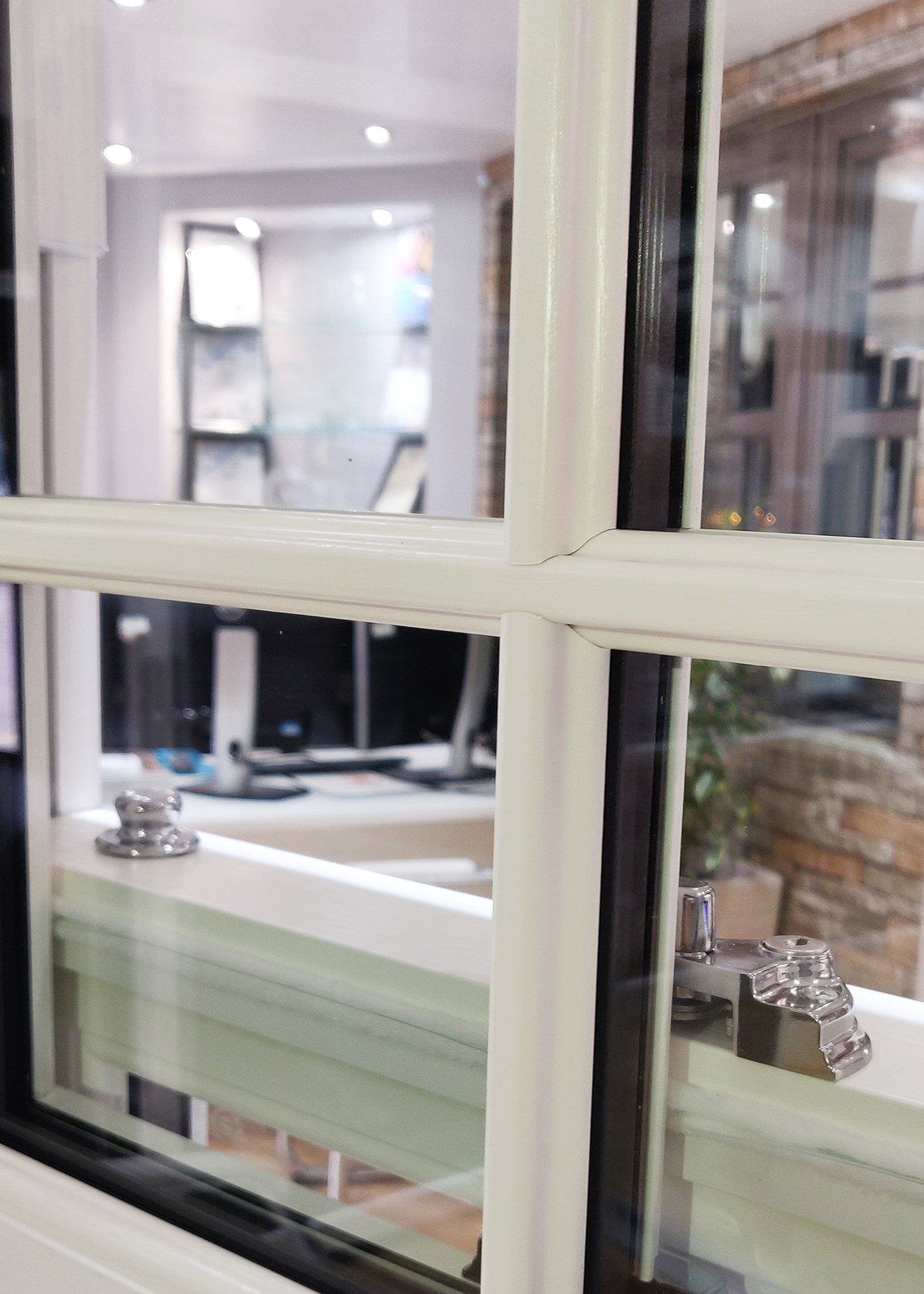
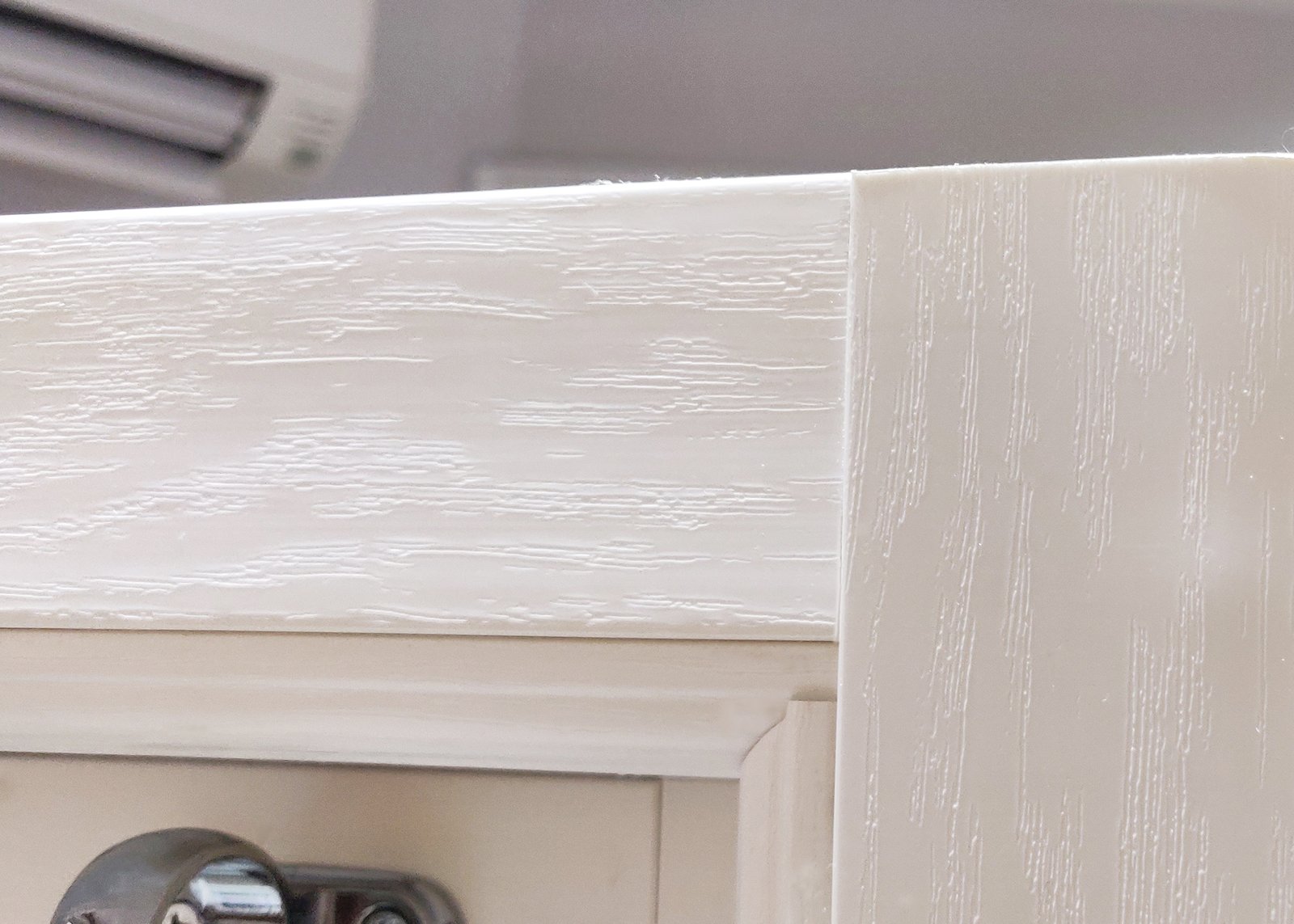
Traditional timber sash windows typically feature joinery details that differ visually from standard welded uPVC corners.
Some modern systems offer mechanical joints to recreate this appearance.
For Victorian windows with two-over-two glazing, a vertical astragal bar can also reproduce the traditional division between panes.
Modern astragal bars can be fitted to the glass surfaces, sometimes with spacer bars inside the sealed glazing unit to strengthen the appearance of separate panes.
Not every feature is available in every uPVC sash-window range, so the exact configuration should be checked before ordering.
What Should You Check Before Replacing Victorian Sash Windows?
Before choosing replacements, examine the original windows and identify the features that contribute to the property’s character.
Pay particular attention to the glazing pattern, sash horns, meeting rail position, bottom rail depth and overall frame proportions.
If the existing windows are original timber, assess whether they can be repaired. Traditional sash windows can often be restored, and replacement is not always necessary.
For listed buildings or properties subject to conservation restrictions, changes to historic windows may require consent. uPVC replacements are not necessarily acceptable simply because they resemble timber.
Where replacement is appropriate, modern uPVC sash windows can offer a traditional appearance alongside double glazing, sliding operation and relatively low routine frame maintenance.
At Sliding Sash Windows UK, you can explore our made-to-measure uPVC sliding sash windows and configure available design options online.
When selecting Victorian-style replacements, focus on reproducing the original window’s proportions and detailing rather than simply choosing a product labelled “Victorian”.