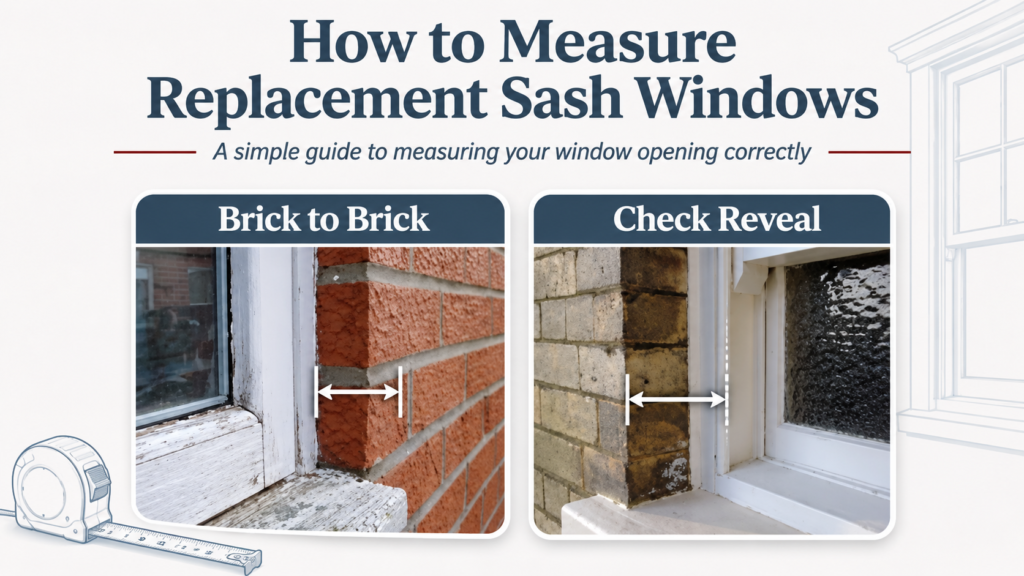
To measure for replacement sash windows, measure the external brickwork opening in millimetres, taking the width and height at three points and recording the smallest measurements. Then check whether your existing window is fitted brick-to-brick or behind a check reveal, as this determines the allowance needed for your replacement window.
Our measuring guide covers both methods below.
Step 1: Measure the Window Opening
Using a tape measure:
- Measure the width at the top, middle and bottom of the opening.
- Measure the height on the left, centre and right.
- Record the smallest width and height in millimetres.
- Check the opening for uneven brickwork and identify how the existing frame is fitted.
These are your opening measurements, not necessarily the final dimensions you should enter when ordering.
Step 2: Identify Your Window Fitting Type
Our Spectus uPVC sash-window measuring guide explains two common installation arrangements.
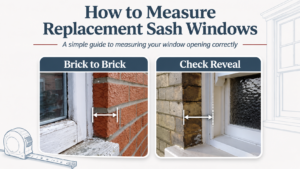
Brick-to-Brick Measurement
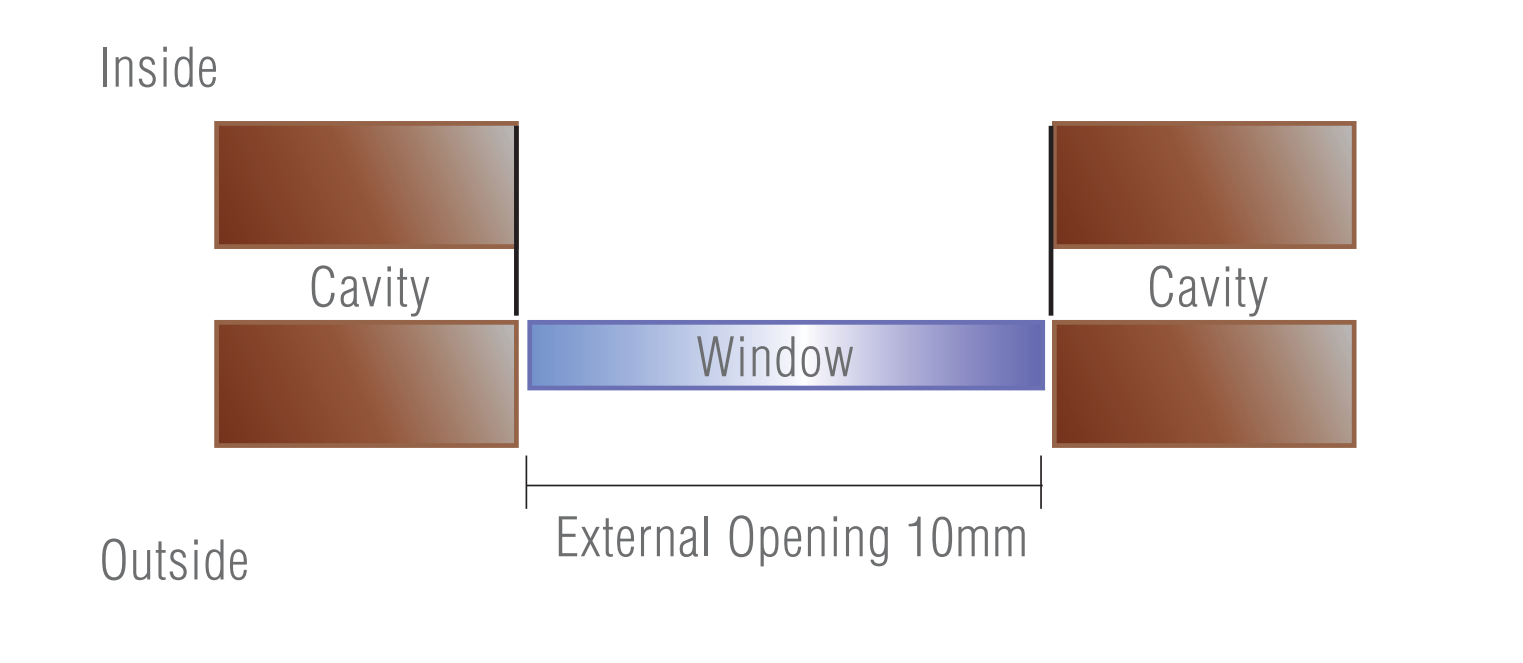
With a brick-to-brick installation, you will typically see around 20–40 mm of visible brickwork outside the existing window frame.
How to measure: Measure the external brickwork opening and deduct 10 mm from the overall width and 10 mm from the overall height.
For example:
| Measurement | Width | Height |
| External opening | 1,200 mm | 1,500 mm |
| Deduct | 10 mm | 10 mm |
| Window size | 1,190 mm | 1,490 mm |
Check Reveal Measurement
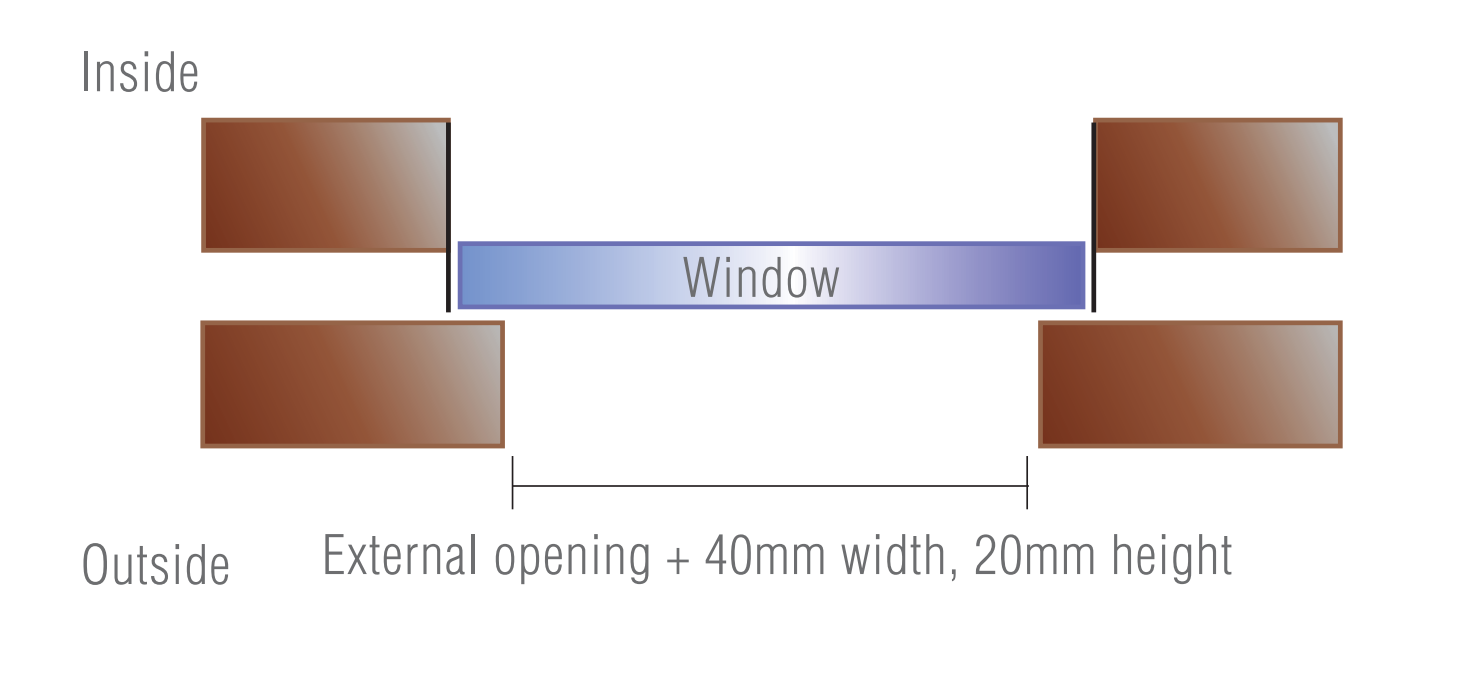
With a check reveal, the window frame sits partially behind the external brickwork rather than entirely within the visible opening.
How to measure: Measure the external brickwork opening and add 40 mm to the overall width and 20 mm to the height, provided sufficient clearance is available.
For example:
| Measurement | Width | Height |
| External opening | 1,200 mm | 1,500 mm |
| Add | 40 mm | 20 mm |
| Window size | 1,240 mm | 1,520 mm |
Important: Check that the internal opening provides sufficient width and height to accommodate the larger frame.
These allowances come from our Spectus measuring documentation. Always confirm the correct allowances for the particular sash-window range and installation before ordering.
Step 3: Check Your Measurements Before Ordering
Before entering your dimensions into our online sash-window designer, double-check the width, height and fitting arrangement.
If the existing frame is concealed, the opening is uneven or you are unsure which measuring method applies, have the opening professionally checked.
Need a visual explanation? View our Sash Window Measuring Guide (PDF), which includes photographs and diagrams of both installation methods.
Once your finished dimensions are confirmed, you can explore our sliding sash windows ranges and choose your preferred configuration online.